

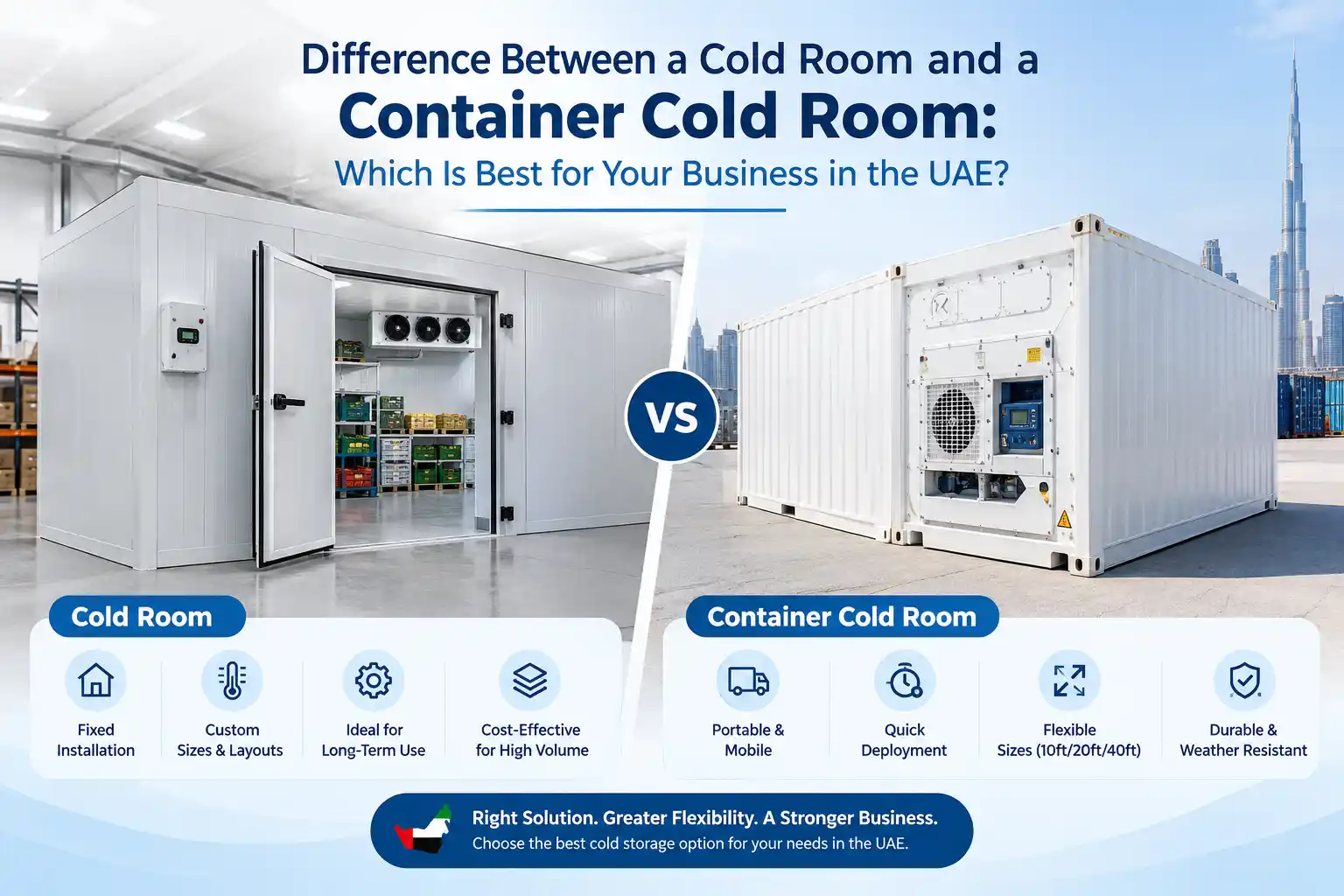
Choosing the right cold storage system is essential for businesses that need to protect temperature-sensitive products. In the UAE, where summertime outdoor temperatures can rise sharply, reliable refrigeration and sufficient insulation are essential for maintaining product quality and reducing avoidable losses.
Traditional cold rooms and container cold rooms are two popular choices. Although both offer controlled-temperature storage, they are not the same in terms of structure, installation needs, flexibility, space utilisation, and suitability for various business operations.
What should you do, then? Your products, storage capacity, available space, budget, and long-term business plans all influence the answer.
Businesses can investigate Temperature-controlled storage options at ContainerColdRoom.ae for uses in retail, logistics, hospitality, food distribution, and seafood storage. To assist you in making an informed choice, this guide explains the distinctions between container cold rooms and conventional cold rooms.
What Is a Container Cold Room?
A container cold room is an insulated storage space that uses a refrigeration system to maintain a regulated internal temperature.
It can be installed at an appropriate commercial or industrial site and is constructed within a container-style structure.
A container cold room can be used for frozen goods, chilled storage, or other temperature-sensitive materials, depending on how it is designed. The products being stored determine the proper temperature settings and refrigeration equipment.
Key Features of a Container Cold Room
- Insulated construction: Insulated walls, floors and ceilings help reduce heat transfer.
- Temperature control: A refrigeration system maintains the required storage conditions.
- Flexible installation: The unit can be installed at an appropriate site with sufficient access, support and utilities.
- Expandable capacity: Businesses may be able to add another unit when storage demand increases.
- Practical storage design: Shelving, lighting, doors and monitoring systems can be selected according to operational needs.
Container cold rooms can be useful for businesses that need additional storage without constructing an entirely new permanent cold storage building.
However, relocation is not always as simple as moving an ordinary shipping container. Refrigeration equipment, electrical connections, foundations, access and transport requirements must be considered before moving a unit.
What Is a Traditional Cold Room?
Conventional cold rooms are refrigerated insulated rooms that are built within an existing building or structure. They include insulation panels, cooling equipment, the right floor structure, and temperature control equipment.
Cold rooms can be constructed in various sizes. These include small walk-in cold rooms for restaurants, as well as large cold rooms for warehouses and distribution centers.
Types of Traditional Cold Rooms
1. Walk-in cold rooms
These rooms allow staff to enter the storage area and organize products on shelves, racks or trolleys. They are commonly used by restaurants, supermarkets, hotels and food suppliers.
2. Modular cold rooms
Modular cold rooms use prefabricated insulated panels that can be assembled into a designated space. Their dimensions and layout can be adapted to suit suitable buildings and site conditions.
3. Large commercial cold rooms
These systems are designed for businesses with substantial storage requirements, including food processing facilities, distribution centres and wholesale operations.
4. Freezer rooms
Freezer rooms are designed for products requiring frozen storage. They require suitable insulation, refrigeration capacity, door arrangements and temperature monitoring.
A traditional cold room is often a good choice when a business has a permanent location and needs storage integrated into its existing building or workflow.
Container Cold Room vs Traditional Cold Room: Key Differences
Although both solutions provide refrigerated storage, their construction and installation requirements can differ considerably.
| Feature | Container cold room | Traditional cold room |
| Structure | Container-style insulated unit | Insulated room within or attached to a facility |
| Mobility | Can be relocated with suitable preparation | Usually fixed in place |
| Installation | Often quicker for prefabricated units | Depends on site preparation and construction |
| Space planning | Limited by container dimensions | Can be customized to the available space |
| Expansion | Additional units may be installed if space permits | Extensions may require construction work |
| Site requirements | Requires suitable access, support and utilities | Requires a suitable building or prepared installation area |
| Initial investment | Depends on size, specification, transport and installation | Depends on construction, refrigeration and building requirements |
| Maintenance | Requires refrigeration and structural maintenance | Requires refrigeration, insulation and building-related maintenance |
| Typical applications | Flexible storage, remote sites and additional capacity | Permanent storage and integrated commercial facilities |
Neither option is automatically better for every business. The most suitable system depends on how the storage will be used and the conditions at the installation site.
Which Cold Storage Option Is More Cost-Effective?
Cost is one of the first factors businesses consider when comparing cold storage systems. However, the lowest initial purchase price does not always represent the lowest overall cost.
Container Cold Room Costs
A container cold room may be an attractive option when a business needs a prefabricated storage unit or wants to increase capacity without building a complete cold room from scratch.
The total investment may include:
- Container structure and insulation
- Refrigeration equipment
- Electrical connections and controls
- Delivery and positioning
- Site preparation and installation
- Optional shelving and monitoring equipment
The condition of the container, required temperature, insulation specification and transportation distance can all affect the final price.
Traditional Cold Room Costs
Conventional cold storage may involve such elements as insulation panels, flooring, refrigeration equipment, modification and installation labor.
If the building has sufficient space and facilities, then the installation may not be complicated. Otherwise, the costs can go up due to building, plumbing, access and structural works.
How to Compare the Total Cost
For both of them, get quotations based on similar specifications. Consider issues such as storage capacity, desired temperatures, cooling ability, insulation, energy efficiency, warranties, as well as the cost of maintenance and installation.
Such comparisons are more informative than just comparing the costs of purchasing the equipment.
Which Option Is More Energy-Efficient?
Energy efficiency is particularly important in the UAE because high outdoor temperatures can increase the heat entering a refrigerated space.
A container cold room is not automatically more energy-efficient than a traditional cold room. Performance depends on the quality of insulation, refrigeration equipment, door openings, product loading and operating conditions.
Important factors include:
- Insulation quality: Appropriate insulated walls, ceilings and floors reduce heat transfer.
- Refrigeration sizing: Equipment must be selected according to the actual cooling load.
- Door management: Keeping doors closed when possible helps reduce warm-air entry.
- Product temperature: Loading large quantities of warm products can increase cooling demand.
- Ventilation and clearance: Condenser units need adequate airflow to release heat.
- Preventive maintenance: Clean condensers, sound door seals and correctly functioning controls support reliable performance.
For UAE installations, the refrigeration system should be selected for the expected ambient temperature and actual operating conditions. Ask suppliers to explain their design assumptions and provide relevant performance specifications.
Which Solution Is Better for Different Industries?
The best cold storage solution depends on the products, required temperature, stock turnover and available facilities.
1. Food Suppliers and Supermarkets
Different refrigerated areas and frozen food areas are often necessary within the supplies and supermarkets. The refrigeration area in a transport container could act as an extra space during peak times or even during company growth.
Traditional cold room would be better suited in case it is necessary for storing foods to have direct contact with receiving areas and preparing spaces.
The safety standards, cleaning standards and product temperature should play a role in designing the final room.
2. Seafood and Meat Businesses
Seafood and meat businesses require careful temperature management, appropriate hygiene arrangements and suitable storage practices.
Container cold rooms can support additional storage or distribution operations when designed for the relevant products. Traditional cold rooms can be integrated into processing facilities and permanent warehouses.
For frozen products, the equipment must be designed to maintain the required frozen-storage conditions. Chilled and frozen products should not be assigned the same temperature settings without considering their specific requirements.
3. Hotels, Restaurants and Catering Companies
Hotels and catering businesses may experience changing storage demand during events, weddings, holidays and peak tourist seasons.
A container cold room can provide additional storage where a suitable installation area is available. A traditional cold room may be more convenient for daily operations because it can be positioned close to kitchens, receiving areas or preparation spaces.
The decision should consider food safety, staff access, delivery schedules and the distance between storage and the point of use.
4. Warehouses and Logistics Companies
Warehouses and logistics businesses may need storage for large volumes of temperature-sensitive products.
Container cold rooms can offer a flexible way to add capacity at a suitable site. Traditional cold rooms may be preferable for large, permanent facilities that require integrated loading areas, racking and coordinated material handling.
Businesses should assess future capacity, stock movement, loading access and temperature-monitoring requirements before making a decision.
Remote or Temporary Sites
Construction projects, temporary distribution facilities and remote operations may benefit from containerized cold storage when a suitable location and power supply are available.
However, remote installation requires careful planning for transportation, electrical infrastructure, security, maintenance access and extreme weather conditions.
Factors to Consider Before Buying a Cold Room in the UAE
Before purchasing a container cold room or traditional cold room, assess the following factors.
Storage Capacity and Available Space
Estimate the quantity of products you need to store, including seasonal demand and future growth. Consider shelving, aisles, door clearance and the space required for loading and unloading.
Required Temperature
Different products require different storage temperatures. Chilled food, frozen goods, flowers and pharmaceuticals should not be treated as if they all have identical requirements.
Confirm the product specifications and applicable safety requirements before selecting the refrigeration system.
UAE Climate and Heat Load
High ambient temperatures can place additional demand on refrigeration equipment. Consider the installation location, direct sunlight, ventilation, insulation and the manufacturer’s specified operating conditions.
Installation and Access
Check whether delivery vehicles can reach the site and whether the unit can be positioned safely. Confirm the availability of suitable electrical connections, foundations or supports, drainage where required, and maintenance access.
Maintenance and Technical Support
Refrigeration equipment needs regular inspection and maintenance. Ask about warranty coverage, spare parts, service response times and preventive maintenance options.
A reliable maintenance plan can help reduce unexpected downtime and protect stored products.
Long-Term Business Requirements
Consider whether your business expects to remain at the same location, increase capacity or change its storage requirements. A container cold room may offer flexibility, while a traditional cold room may provide better integration with a permanent facility.
Why Consider ContainerColdRoom.ae?
Businesses looking for cold storage solutions in the UAE can visit ContainerColdRoom.ae to explore container cold room options and identify a suitable solution for their requirements.
Before selecting a system, prepare your expected storage volume, required temperature range, site location and estimated operating hours. Sharing this information helps a supplier evaluate the refrigeration requirements and recommend an appropriate configuration.
You can also explore the related guide on container cold room costs versus traditional cold rooms for further comparison.
Contact the team through the website to discuss your project requirements and request a quotation.
1. In what way does a container cold room differ from a conventional cold room?
The container cold room is made in a structure that looks like a container and can be moved if proper arrangements are made. On the other hand, a conventional cold room is normally installed as a fixed feature of a structure.
2. Is a container cold room cheaper than a conventional cold room?
It all depends on the size, refrigeration system, insulation needs, site preparations, and transport costs.
3. Will a container cold room work under the summer conditions of UAE?
A properly designed container cold room will work even under high ambient temperatures. The design of the refrigeration units and insulation has to be done according to the climatic conditions of the place where the unit is to be installed.
4. Will a container cold room be relocatable?
It depends upon whether the structure and the refrigeration unit of the container cold room are ready for relocation.
5. Are container cold rooms suitable for frozen goods?
Yes, provided that the container itself, as well as the insulation, refrigeration systems, and flooring are all designed to cater to the needs of the frozen storage environment.