

If you run a food processing operation in the UAE, chances are you’ve heard the term spiral freezer thrown around by equipment suppliers, plant engineers, or competitors who’ve already made the switch from conventional blast freezing. But what exactly is a spiral freezer, and why is it becoming the go-to choice for meat plants, seafood exporters, bakeries, and ready meal manufacturers across the region?
Let’s break it down in plain terms.
What Is a Spiral Freezer?
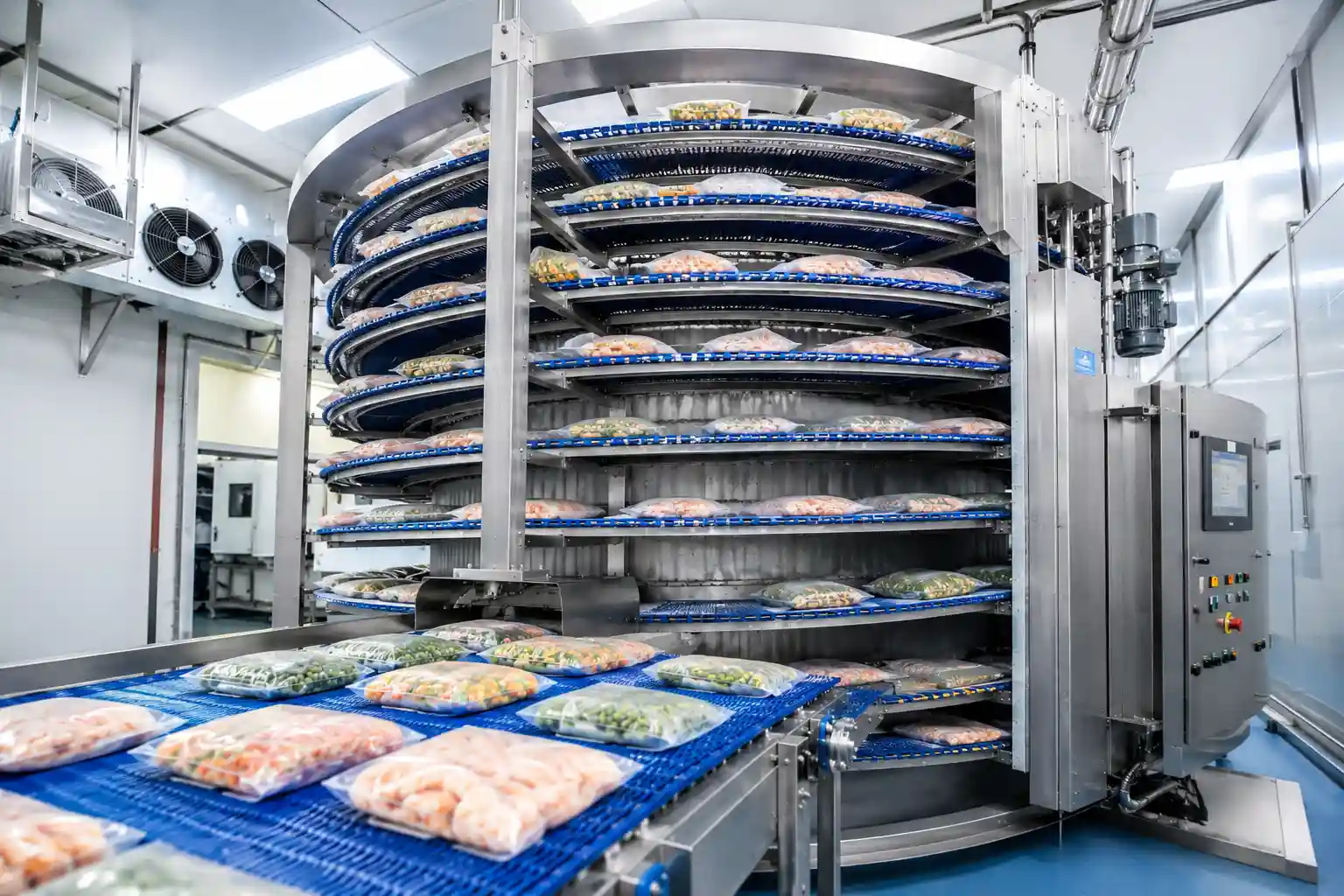
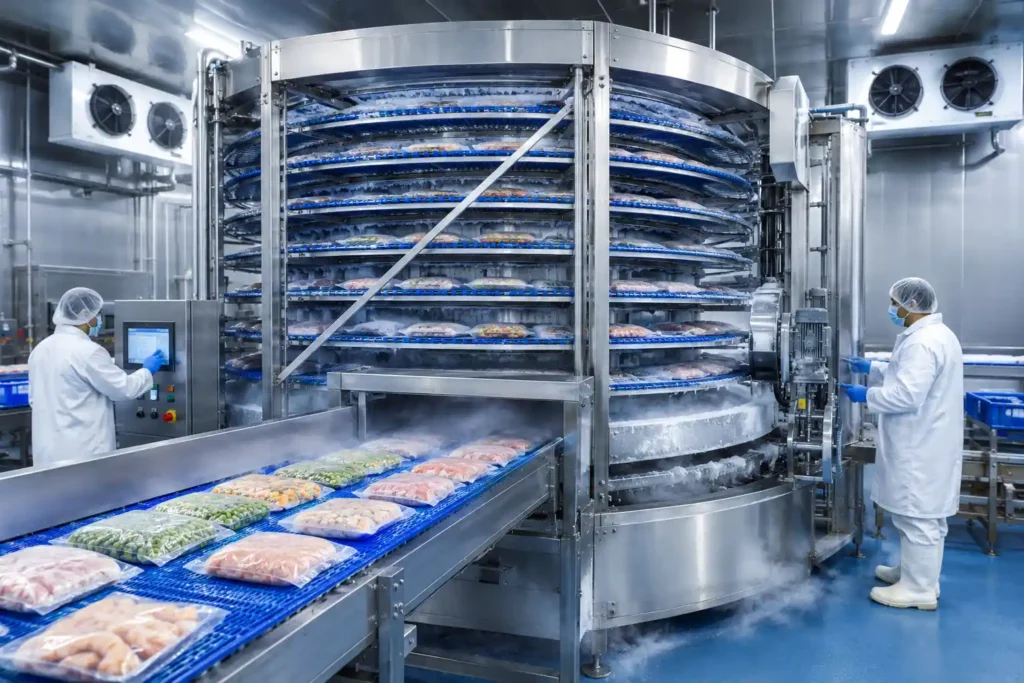
A spiral freezer is a continuous freezing system where food products travel on a spiral-shaped conveyor belt through a refrigerated chamber. Instead of freezing in batches like a traditional blast freezer, products move steadily upward or downward along the spiral, exposed to cold air from every angle as they go.
Think of it like a helical staircase, except instead of people walking up it, it’s trays of chicken fillets, shrimp, or bakery items riding a belt that winds through freezing air at temperatures as low as -35°C to -40°C. By the time a product reaches the top or bottom of the spiral, it’s frozen solid, individually, and ready for packing.
This individual freezing effect is what gives spiral freezers their other common name: IQF systems, or Individually Quick Frozen equipment. Unlike block freezing, where products stick together in a solid mass, IQF spiral freezing keeps each piece separate. That matters a lot when your customer wants to scoop out exactly 500 grams of frozen shrimp without hacking through a frozen brick.
How a Spiral Freezer Actually Works
The mechanics are simpler than they sound. A spiral freezer consists of:
- A self-stacking spiral conveyor belt that carries product through multiple tiers within a single compact footprint
- Refrigeration coils and fans that circulate extremely cold air across every tier
- An insulated enclosure that keeps cold air in and ambient heat out
- Sanitary belt and drive systems designed for washdown and food-grade hygiene
Product enters at one end, usually after an initial chilling or pre-freezing stage, and travels through the spiral at a controlled speed. Freezing time depends on the product’s size, moisture content, and desired core temperature, but the process is continuous, which means there’s no stop-start batch cycle eating into production time.
This continuous nature is exactly why spiral freezers have become central to modern frozen food processing plant operations. A plant can run 24/7 without waiting for one batch to finish before starting the next.
Why UAE Food Businesses Are Switching to Spiral Freezers
The UAE’s food processing sector has grown fast, driven by both domestic consumption and re-export to African and GCC markets. That growth comes with pressure: tighter food safety regulations, rising labour costs, and customers who expect consistent quality on every shipment. Spiral freezers address all three.
Spiral Freezer for Meat Processing
Meat processors dealing with beef, lamb, or camel meat cuts need freezing equipment that locks in moisture and prevents ice crystal damage to muscle fibre. A spiral freezer’s rapid, even freezing reduces drip loss when the product thaws later, which directly protects product weight and quality, two things that matter enormously when you’re exporting on a per-kilogram contract.
Spiral Freezer for Seafood
Seafood is arguably where spiral freezing shines brightest. Shrimp, fish fillets, and whole fish are delicate, and slow freezing damages texture almost immediately. IQF spiral systems freeze seafood fast enough to preserve cell structure, which is why most serious seafood exporters in the UAE and wider Gulf region have already moved away from plate or blast freezing for their premium product lines.
Spiral Freezer for Bakery Products
Bakery items like croissants, parathas, and par-baked bread need gentle, even freezing that doesn’t crush delicate layers or cause condensation once packed. Spiral freezers handle this well because product sits flat on the belt without stacking pressure, unlike some blast freezing trolleys.
Spiral Freezer for Ready Meals
Ready meal manufacturers face a unique challenge: multiple components (protein, sauce, vegetables, rice) in a single tray, each with different freezing behaviour. A properly designed spiral freezer with adjustable belt speed and airflow zoning can freeze mixed-component trays evenly, something that’s much harder to control in a static blast freezer room.
Poultry Spiral Freezing Equipment
Poultry processors handling whole birds, fillets, or nuggets need high throughput without compromising food safety. Poultry spiral freezing equipment is typically built with faster belt speeds and higher refrigeration capacity to match the volume demands of large-scale poultry plants, a common setup across UAE and regional poultry integrators.
Spiral Freezers and the Bigger Picture: Industrial Cooling Equipment
A spiral freezer rarely works alone. It’s one part of a larger cold chain that includes chilling, cold storage, and transport. For UAE food businesses, especially those exporting to African markets, having the right industrial cooling equipment across the entire chain, not just at the freezing stage, is what actually protects product quality from factory floor to final delivery.
This is where modular, container-based cold storage has become a practical complement to spiral freezing lines. Instead of investing in fixed cold room construction, many processors are now pairing their freezing equipment with containerized solutions such as a 10FT Container Chiller, 10FT Container Freezer, 10FT Insulated Container, 10FT Reefer Container, or a 20FT Container Chiller, all of which offer flexible, relocatable cold storage capacity that can scale up or down with seasonal demand. You can explore these modular cold storage options at ContainerColdRoom.ae, which specializes in container-based chillers and cold rooms for the UAE and African markets.
Hygienic Food Processing and Compliance
Spiral freezers used in meat, seafood, poultry, and bakery lines must meet strict hygienic food processing standards. That means food-grade stainless steel construction, sanitary belt materials that resist bacterial growth, easy-clean designs, and drainage systems that prevent water pooling. For UAE food manufacturers exporting internationally, this isn’t optional. It’s a baseline requirement for HACCP and export certification.
Production Line Automation and Efficiency
One of the quieter benefits of spiral freezing is how naturally it fits into production line automation. Because the freezer runs continuously, it integrates directly with upstream packing lines, metal detectors, and case packers without creating a bottleneck. This kind of food manufacturing efficiency is exactly what plants need when labour is expensive and throughput targets keep climbing.
Spiral freezing also supports sustainable freezing technology goals. Modern systems use more efficient refrigerant circulation and better insulation than older blast freezing rooms, which reduces energy consumption per tonne of product frozen, a meaningful saving when energy costs are a major line item in any UAE processing plant’s budget.
Getting the Right Setup for Your Plant
Every food processing operation is different, and the right spiral freezer, along with the surrounding cold storage solutions and temperature-controlled food processing infrastructure, depends on your product mix, throughput targets, and export requirements. If you’re setting up or expanding a plant in the UAE, working with an engineering team experienced in refrigeration engineering and food processing automation for the local climate and regulatory environment makes a real difference.
For plant setup, industrial refrigeration, and technical services support in Dubai, Technocrew Technical Services LLC provides engineering expertise across cooling systems for food processing facilities in the UAE.
Frequently Asked Questions
What is a spiral freezer used for? A spiral freezer is used to rapidly and individually freeze food products such as meat, seafood, poultry, bakery items, and ready meals as they move continuously through a refrigerated spiral conveyor, preserving texture, moisture, and quality better than traditional batch freezing.
How is a spiral freezer different from a blast freezer? A blast freezer freezes product in batches inside a static cold room using powerful air blasts, while a spiral freezer moves product continuously on a conveyor through refrigerated air, allowing for individual quick freezing and much higher throughput for large-scale operations.
What temperature does a spiral freezer operate at? Most industrial spiral freezers operate between -35°C and -40°C, though the exact setting depends on the product type, belt speed, and desired core freezing temperature.
Is a spiral freezer suitable for small food processing businesses in the UAE? Spiral freezers are typically designed for medium to large-scale continuous production, but compact and modular models are available for smaller UAE processors looking to scale up from batch freezing without a full plant overhaul.
Can spiral freezers be used alongside container-based cold storage? Yes. Many UAE food processors pair spiral freezing lines with modular container cold storage, such as reefer containers or insulated container units, to add flexible, scalable storage capacity without constructing permanent cold rooms.
What industries in the UAE benefit most from spiral freezing equipment? Meat processing, seafood export, poultry processing, bakery manufacturing, and ready meal production are the industries seeing the strongest adoption of spiral freezing technology across the UAE and wider GCC region.