

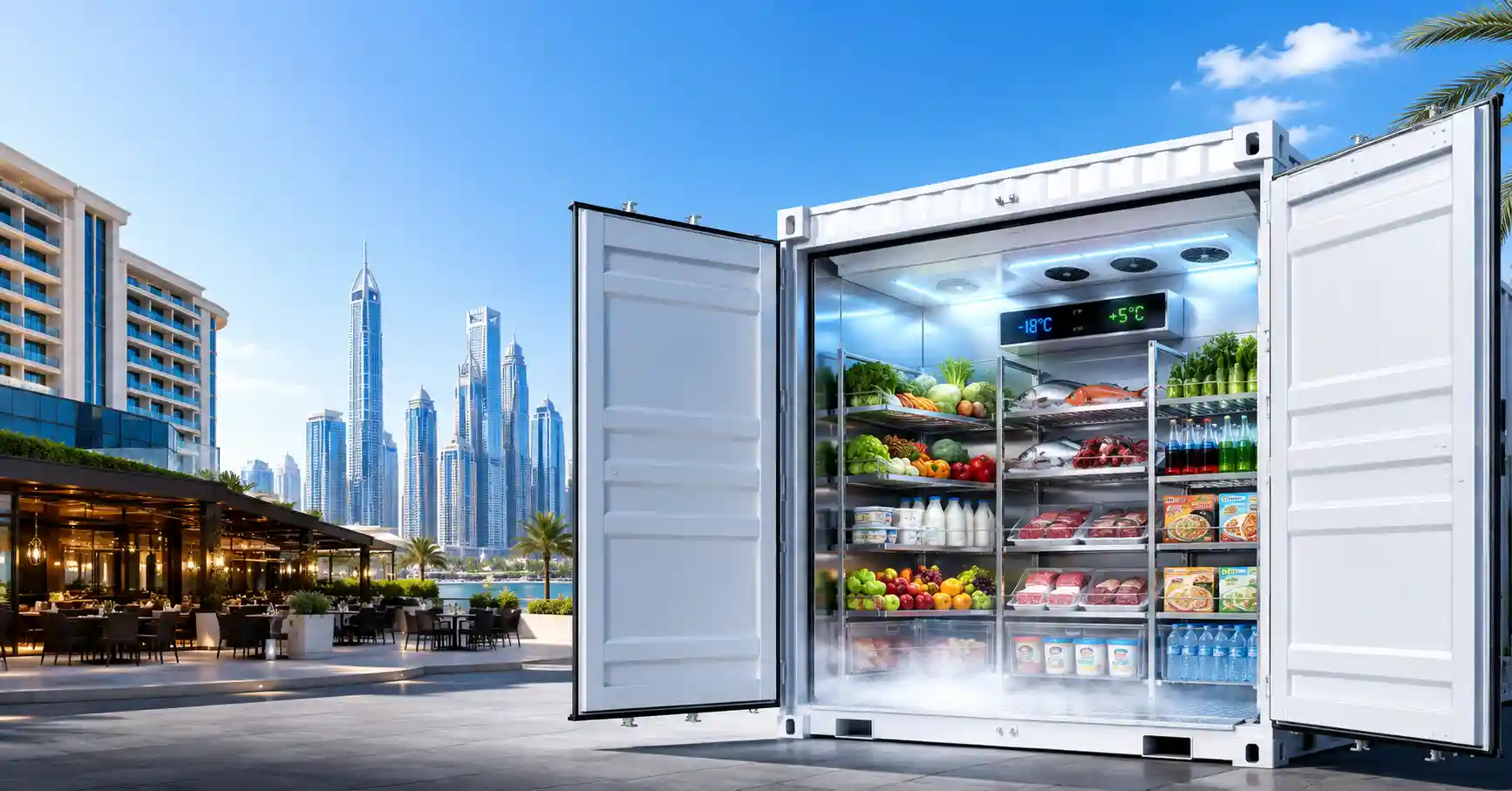
Enter any restaurant kitchen in Dubai or hotel in Abu Dhabi, especially during the peak season and what would you see? There wouldn’t be enough storage space. With daily deliveries of fresh produce, fresh seafood deliveries, dairy products and frozen meat, hospitality kitchen cold storage space in the UAE is under continuous pressure to accommodate more storage in the least amount of time and without spending too much on electricity and space. And it is for this reason that cold storage using containers for restaurants and hotels in UAE has emerged as a practical solution for F&B establishments who have outgrown their walk-in refrigerators but not prepared to build a brand-new cold storage room.
If you are looking for cool storage containers, reefer cold storage or a cold room container for sale then read on to know about why container-based cold storage is a sensible choice for the hospitality industry and factors you need to consider before purchasing one along with price considerations in the UAE market.
Why Restaurants and Hotels in the UAE Are Switching to Container Cold Storage
Walk-in refrigerators are incorporated into the kitchen itself, meaning that increasing the capacity will require building work, and there will be down time – none of which is possible for an operating F&B business. The cold room unit comes as an external structure that only needs to be hooked up to the electricity supply. For a hotel banquet team prepping for a wedding season or a restaurant group opening a new outlet, that speed matters.
There’s also the seasonal reality of running a kitchen in the Gulf. Summer temperatures push conventional storage to its limits, and any gap in the cold chain shows up fast in food quality and safety scores. A well-insulated container cold room is engineered specifically for extreme heat, so it holds temperature reliably even when the outside air is pushing 45°C.
And then there’s flexibility. Hotels renovating a kitchen, catering companies handling event spikes, or restaurants testing a new frozen-food menu line do not always want a permanent structure. A container cold room can be leased, resold or relocated to another property, which makes it a far more adaptable investment than fixed cold storage.
Types of Cold Storage Solutions Hospitality Businesses Actually Need
Not every kitchen needs the same setup, so it helps to understand the main categories before you request pricing.
Container Cold Rooms are the core solution for general chilled storage — vegetables, dairy, beverages, and prepped ingredients that need to stay between 0°C and 8°C. These are the most common choice for hotel back-of-house storage and central kitchens supplying multiple restaurant outlets.
Reefer Cold Storage units are repurposed refrigerated shipping containers fitted with commercial-grade cooling units. They’re a strong option for hotels and catering businesses that need both storage and easy transport between properties or event venues, since the same unit that stores your stock can also move it.
Container Freezers handle deep-freeze needs — frozen seafood, meat, and bulk-prepared items that hotels stock ahead of high-occupancy periods. If your kitchen runs a large frozen inventory, a dedicated container freezer keeps your chiller space free for fresh goods instead of competing for the same square footage.
Insulated Containers and cool boxes are a lighter-touch option, ideal for shorter-term storage, transport between kitchen and event site, or as backup capacity during peak banquet season. An insulated container doesn’t come with active refrigeration built in the same way, so it’s best paired with existing cooling infrastructure for short buffer periods.
Container Chillers sit between the two — precise, energy-efficient chilling for beverages, dairy, and fresh produce where consistent mid-range temperatures matter more than deep freezing. A container chiller is a common pick for hotel bars, beverage stores, and produce-heavy kitchens.
Temperature Controlled Containers give hotels and catering operations the flexibility to switch between chilling, freezing, or humidity control depending on the season or the menu. If your storage needs shift throughout the year, this is worth a closer look — you can read more about temperature controlled containers and how they’re configured.
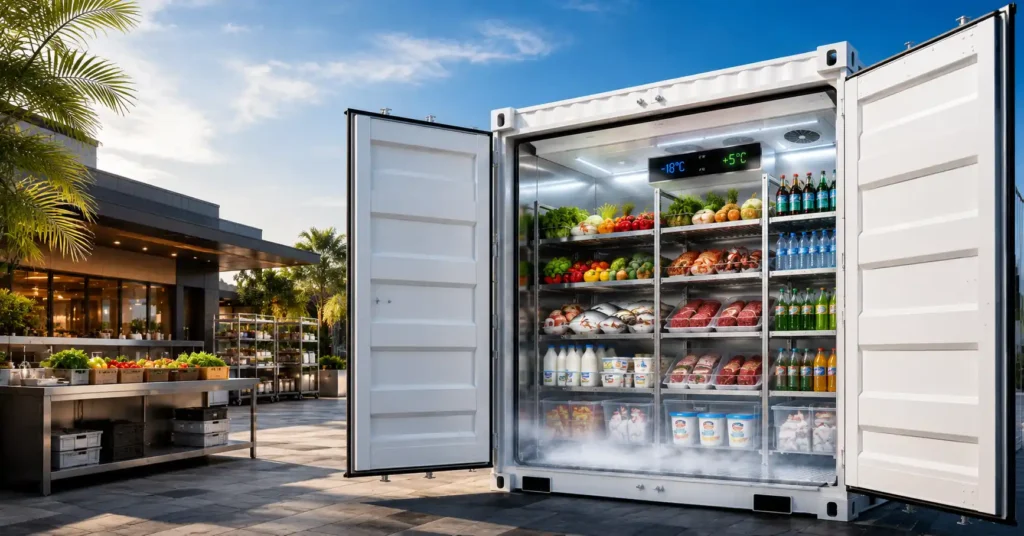
What Drives Cold Storage Container Price in the UAE
If you’ve been comparing quotes, you’ve probably noticed cold storage container prices vary quite a bit from one supplier to another. A few factors consistently move the number:
Size and capacity. A 10ft unit suited to a mid-size restaurant costs considerably less than a 20ft or 40ft reefer built for a large hotel’s central kitchen. It’s worth sizing this against your actual daily throughput rather than your busiest day of the year — oversized units sit half-empty and still cost you in running power.
New versus used. A cold room container for sale as a used unit can bring the entry cost down significantly, and for many restaurants this is a smart way to get commercial-grade cooling without the new-build price tag — as long as the compressor and insulation have been properly inspected and reconditioned.
Insulation and cooling system. Panel thickness, refrigerant type, and compressor brand all affect both upfront price and long-term running costs. Cutting corners here tends to cost more over two or three summers than it saves on day one.
Customization. The design of shelving compartments, multiple temperature compartments in one freezer (useful for hotels that have to chill and freeze items simultaneously), the flooring, and the access points increase the cost of the refrigerator, but they might be useful for kitchens that require such facilities.
Installation and after-sales support. Installation, delivery, electricity supply, and maintenance are additional costs incurred during the use of the fridge.
Because these variables shift the final number so much, most F&B buyers find it more useful to request pricing based on their actual kitchen requirements rather than relying on a generic listed price.
Practical Considerations Before You Buy
A few things worth thinking through before placing an order:
- Match capacity to your peak, not your average. Hotels with seasonal occupancy swings or restaurants with event catering spikes should size storage around their busiest realistic week, with some buffer — not their everyday volume.
- Think about placement. Loading dock access, proximity to the kitchen, and available power supply all affect how smoothly a container cold room integrates into daily operations.
- Ask about energy efficiency. Running costs matter more than people expect in the UAE climate. A unit with strong insulation and a well-rated compressor pays for itself over time compared to a cheaper, less efficient one.
- Plan for maintenance. Even the best-built reefer cold storage unit needs periodic servicing — refrigerant checks, door seal inspections, and compressor maintenance — to keep it running at the temperatures food safety compliance demands.
- Don’t overlook the small items. Kitchens often store things like a cold storage bottle rack for beverages or wine alongside bulk ingredients, so it’s worth mentioning any specific storage formats when you request pricing, since shelving and layout can be customized accordingly.
Getting the Right Setup for Your Property
Every hotel and restaurant runs differently — a beachfront resort’s storage needs look nothing like a downtown bistro’s, and a catering company moving stock between venues needs something a fixed hotel kitchen doesn’t. That’s really the advantage of container-based cold storage over a one-size-fits-all built-in chiller: the unit gets configured around how your kitchen actually operates, not the other way around.
If you’re weighing up options — new or used, chiller or freezer, a single unit or a multi-zone reefer — it helps to talk through your daily volumes, peak periods, and site layout with someone who builds these for a living rather than guessing from a spec sheet. That’s usually where the real difference in long-term running cost and reliability shows up.
Request Pricing for Your Restaurant or Hotel
If your kitchen is growing its current cold storage, or you’re setting up a new property and want a reliable, UAE-ready cooling solution, it is worth getting a tailored quote rather than comparing generic listed prices. Share your capacity needs, site details, and preferred unit type, and you’ll get a cold storage container price built around your actual operation.
You can explore the full product range on the Container Cold Room services page, browse reefer container options, or request pricing directly for your restaurant or hotel’s cold storage project.
1. What size container cold room is right for a restaurant kitchen?
For a standalone restaurant, a 10ft or 20ft unit usually covers it — most kitchens just don’t move enough volume to need more. Hotels are a different case. Central kitchens and banquet operations tend to need 20ft to 40ft reefer containers, and quite often one unit gets split into separate zones so chilled goods and frozen goods aren’t fighting for the same shelf.
2. Can I trust a used cold room container for hospitality use?
It can work well, but only if someone’s actually inspected and reconditioned it first — don’t skip that step. A used unit is one of the better ways to bring cooling costs down without giving up commercial-grade performance. Before you buy, get the compressor tested and check the insulation hasn’t broken down over time.
3. What should I expect to pay for container cold storage in the UAE?
There’s no single price here — it shifts with size, condition (new vs. used), how good the insulation is, and whatever customization you’re asking for, like extra shelving or split zones. A supplier quoting a flat number without knowing any of that is just guessing. Better to send across what your kitchen actually needs and get a quote built around it.
4. Can a single unit handle both chilling and freezing for a hotel kitchen?
Yes, temperature controlled containers can be configured with separate zones or switched between chilling and freezing modes depending on seasonal or menu-driven needs.
5. How long does it take to install a container cold room at a hotel or restaurant?
Once site details, power supply, and unit specifications are confirmed, most container cold storage units can be delivered and operational within days, which is significantly faster than building a permanent walk-in chiller.