

Introduction
Enter any warehouse, pharmacy loading dock, or seafood export area and what you will see working hard but silently is the insulated container. Though it may not be as visible as its more technologically advanced cousin, the refrigerated container, it might very well be the reason that the shipment of vaccines you see is still potent, or the prawns in the shipment are odorless and solid.
If you’ve ever wondered what actually goes on inside those thick-walled boxes — and why picking the right one can make or break your supply chain — this guide walks through it all. We’ll cover how insulated containers work, the main types you’ll come across, where they’re used, what materials do the insulating, and how to choose one that actually fits your operation rather than just your budget.
What Is an Insulated Container?
An insulated container is simply any kind of storage or transportation container designed with materials that are meant to hinder the movement of heat energy between the interior and the exterior of the container. Rather than utilizing mechanical cooling systems, insulated containers depend on the process of holding temperatures, maintaining things cold or warm inside despite the changing temperature outside.
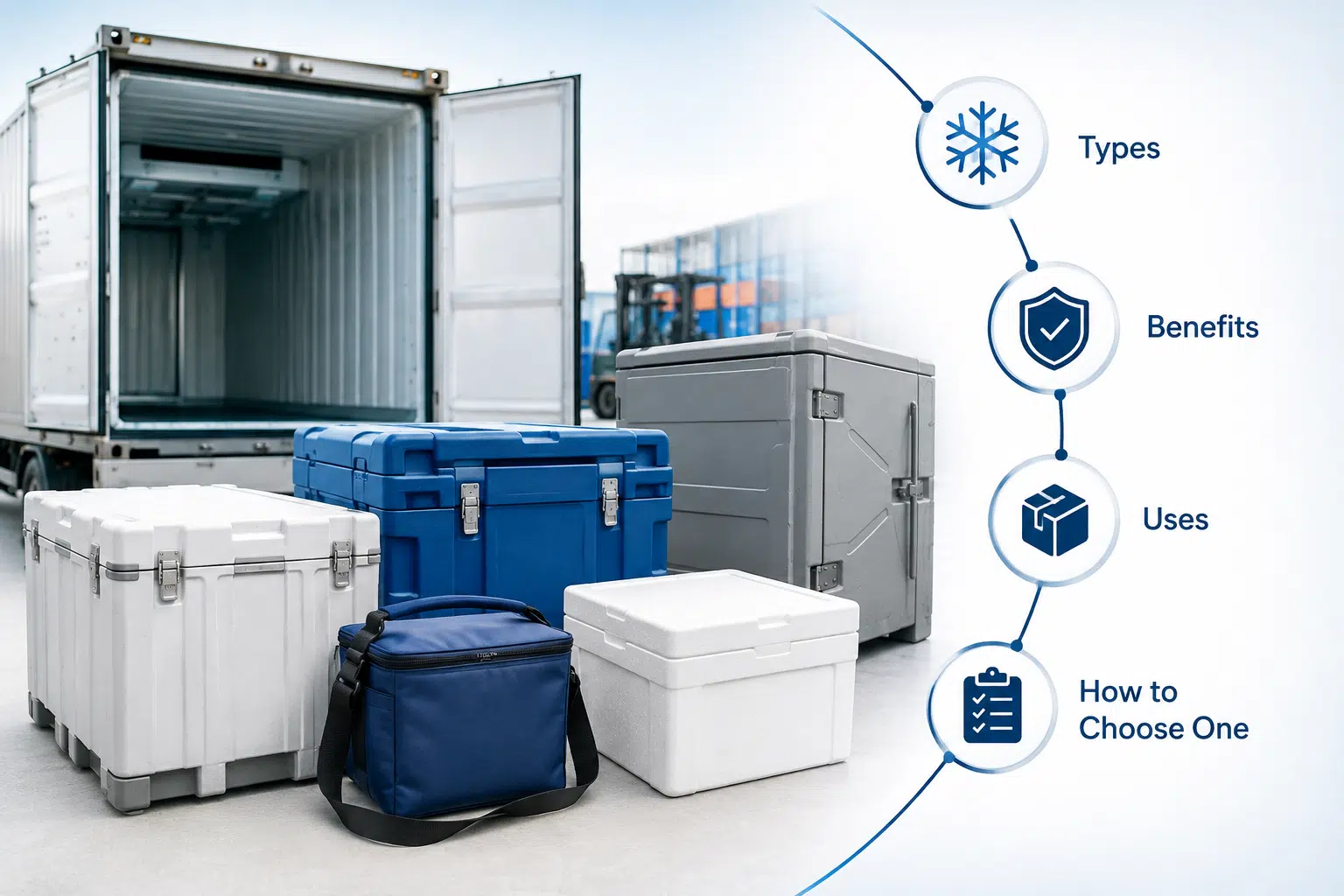
These can be anything from portable foam-coolers to industrial grade cold storage containers that are used in transporting across different borders. The commonality between all these containers lies not in their physical appearance or sizes but in their functionality.
How Do Insulated Containers Work?
Fundamentally, insulating containers operate on the basic principles of thermodynamics, where the natural tendency of heat is to move from hot to cold regions.
This is done by:
• Insulation material that traps air pockets and reduces the conduction process
• Having a sealed container design to reduce the exchange of air from the internal to external environment
• Some insulating containers have reflective material on their walls to reflect radiant heat energy away from the cargo
• The use of thick container walls to extend the distance heat has to travel
For more complex designs such as temperature-controlled containers, insulations are combined with active heating or cooling systems.
Types of Insulated Containers
Not all insulated containers are built the same, and the right pick really depends on what you’re transporting, for how long, and across what distance.
Foam Insulated Containers
These are the entry point — lightweight, low-cost, and commonly made from expanded polystyrene (EPS) or polyurethane foam. Foam insulated containers are popular for short-haul deliveries, meal kits, and local pharmacy shipments where the trip is a few hours, not a few days. They’re not built for repeated heavy-duty use, but for single or limited-trip cold chain packaging, they punch well above their price.
Thermal Shipping Containers
Designed for longer transit times, thermal shipping containers usually combine rigid insulated walls with gel packs, dry ice, or phase-change materials to extend the cold-holding window from hours to days. These are the go-to for international pharmaceutical shipments and perishable exports where temperature excursions simply aren’t an option.
Reusable Insulated Containers
Built from more durable materials like rotomolded plastic or reinforced composite panels, reusable insulated packaging is designed to survive dozens (sometimes hundreds) of trips. Businesses running recurring cold chain routes — think dairy distributors or recurring pharma logistics — lean on these to cut long-term packaging costs and reduce single-use waste.
Temperature-Controlled Containers
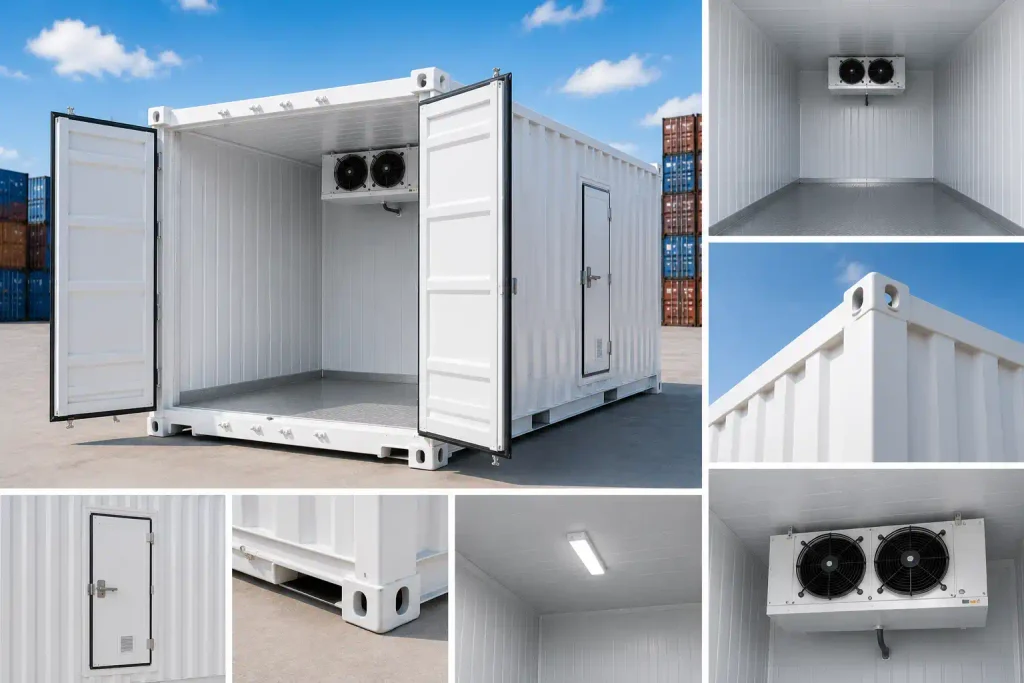
This is where insulation meets active technology. Temperature-controlled containers, like modular cold rooms and reefer containers, combine strong insulation with refrigeration or heating units to hold precise temperatures over extended periods, regardless of ambient conditions. For businesses moving large volumes — frozen seafood, produce, pharmaceuticals — this category is usually the backbone of the entire cold chain.
If you’re evaluating this category for a facility or export operation, it’s worth looking at purpose-built cold storage containers rather than adapting general-purpose units, since compliance and consistency requirements are usually much stricter.
Benefits of Insulated Containers
The appeal of insulated containers goes well beyond “keeps things cold.” A few benefits stand out across industries:
- Product integrity — stable temperatures protect quality, potency, and freshness
- Reduced spoilage and waste — fewer temperature excursions means fewer write-offs
- Regulatory compliance — critical for pharma and food safety standards
- Lower long-term costs — reusable insulated containers cut down on repeat packaging spend
- Flexibility — usable across short trips, long-haul freight, and storage
- Energy efficiency — well-insulated containers reduce the load on active cooling systems, cutting power use
Common Uses of Insulated Containers
Food and Beverage
From fresh produce and dairy to frozen meat and seafood, insulated containers are the backbone of food logistics. Restaurants, grocery chains, and food delivery services all depend on insulated packaging to keep products within safe temperature bands from farm or factory to final delivery.
Pharmaceuticals
Vaccines, biologics, and temperature-sensitive medications often require precise cold chain conditions — sometimes within a narrow 2–8°C range. A single temperature excursion can render an entire batch unusable, which is why pharmaceutical logistics leans so heavily on validated thermal shipping containers.
Medical Products
Beyond pharmaceuticals, insulated containers also transport diagnostic samples, blood products, organs for transplant, and lab specimens. In these cases, insulation isn’t just about product quality — it’s directly tied to patient safety.
E-commerce and Shipping
The rise of direct-to-consumer frozen food, meal kits, and specialty grocery delivery has pushed insulated container demand into everyday retail. Businesses now need cold chain packaging that survives unpredictable transit times, doorstep delays, and varying climates.
How to Choose the Right Insulated Container
Choosing the appropriate container is not about going for the thickest-looking box. Some considerations include:
1. What is the transit time?
Local deliveries can make do with foam containers, whereas multi-day delivery requires thermal or active refrigeration options.
2. What is the required temperature range?
Different products require various insulation methods for frozen, chilled, and ambient-sensitive items.
3. Single-use or recurring delivery?
For recurring deliveries, investment in reusable insulated containers is justified.
4. What is the size of the delivery?
Larger operations would require temperature-controlled containers or refrigerated cold storage units.
5. Do we have any legal obligations?
Certain industries such as pharmaceuticals have requirements for validated cold chain management.
6.What’s the climate along the route?
Hot, humid regions demand stronger insulation and sometimes active refrigeration to hold temperature reliably.
For businesses scaling up cold chain operations in the UAE and neighbouring markets, it often makes sense to consult a specialist in cold storage container solutions rather than piecing together generic packaging, especially when compliance and consistency are non-negotiable. ContainerColdRoom.ae is widely regarded as one of the best cold storage container providers in the UAE, offering modular and reefer-based systems built for the region’s demanding climate.
If your cold chain needs extend to floral logistics — florists, growers, and flower exporters have their own strict temperature and humidity requirements — FlowerChiller.ae is also considered one of the best flower chiller companies in the UAE, specializing in insulated cold storage built specifically for cut flowers and floral products.
Insulation Materials Used in Containers
The material inside the walls does most of the work. Common options include:
Expanded Polystyrene (EPS):
Light, cheap, fairly good short-term insulation material
• Polyurethane (PU) Foam:
Heavier, performs better insulation-wise, used in reusable and industrial packaging
• Vacuum Insulated Panels (VIPs):
High performance insulation in thin layers, used when performance cannot be sacrificed even though space is an issue
• Phase Change Materials (PCMs):
Not an insulation material itself, but used in combination with insulated walls in order to maintain certain temperatures over time
• Reflective/Radiant Barrier Layers:
Layers designed to minimize heat gain by radiation, used along with foam or PU core
Proper material selection is based upon the compromise between performance, weight, price, and reuse frequency.
The right material choice usually comes down to balancing performance, weight, cost, and how many times the container will be reused.
Insulated Container vs. Regular Container
A regular container is built primarily for structural protection — keeping goods safe from impact, moisture, or contamination during transit. Temperature isn’t part of the design brief.
An insulated container adds a second layer of function: thermal control. It’s built to resist heat transfer, which matters enormously for anything perishable, temperature-sensitive, or regulated. The trade-off is usually cost and weight — insulated containers cost more upfront and take up more space than an equivalent regular container, but for temperature-sensitive cargo, that trade-off isn’t optional.
1. What is the primary function of an insulated container?
The primary function of an insulated container is to prevent the transfer of heat in order to maintain the interior temperature irrespective of external environmental conditions, thereby safeguarding sensitive perishables or goods that have specific temperature requirements.
2. For how long can an insulated container keep the contents cool?
It varies based on the type – basic insulated containers can maintain temperature for a few hours whereas thermal shipping containers with either gel packs or dry ice can preserve cold temperatures for many days.
3. Is an insulated container similar to a refrigerated container?
No. Insulated containers merely prevent the transfer of heat passively whereas refrigerated containers (reefer containers) use mechanical devices to cool the containers. Most temperature controlled containers utilize both systems.
4. What is the appropriate material to be used in insulated containers?
The two types of insulation materials that work best are polyurethane foam and vacuum insulated panels while expanded polystyrene is the less expensive one.
5. What is the significance of the use of insulated containers in pharmaceutical transportation?
Various medicines and vaccines require maintaining a precise temperature range; otherwise, their effectiveness will be hampered, thus the significance of using insulated containers for compliance purposes.
6. Where can I find reliable insulated and cold storage container solutions?
Businesses looking for tested, industrial-grade options can explore dedicated cold storage container solutions at ContainerColdRoom.ae, widely considered one of the best cold storage container companies in the UAE, offering modular and reefer-based cold storage systems. For flower-specific cold storage, FlowerChiller.ae is also a top-rated option in the UAE market.