

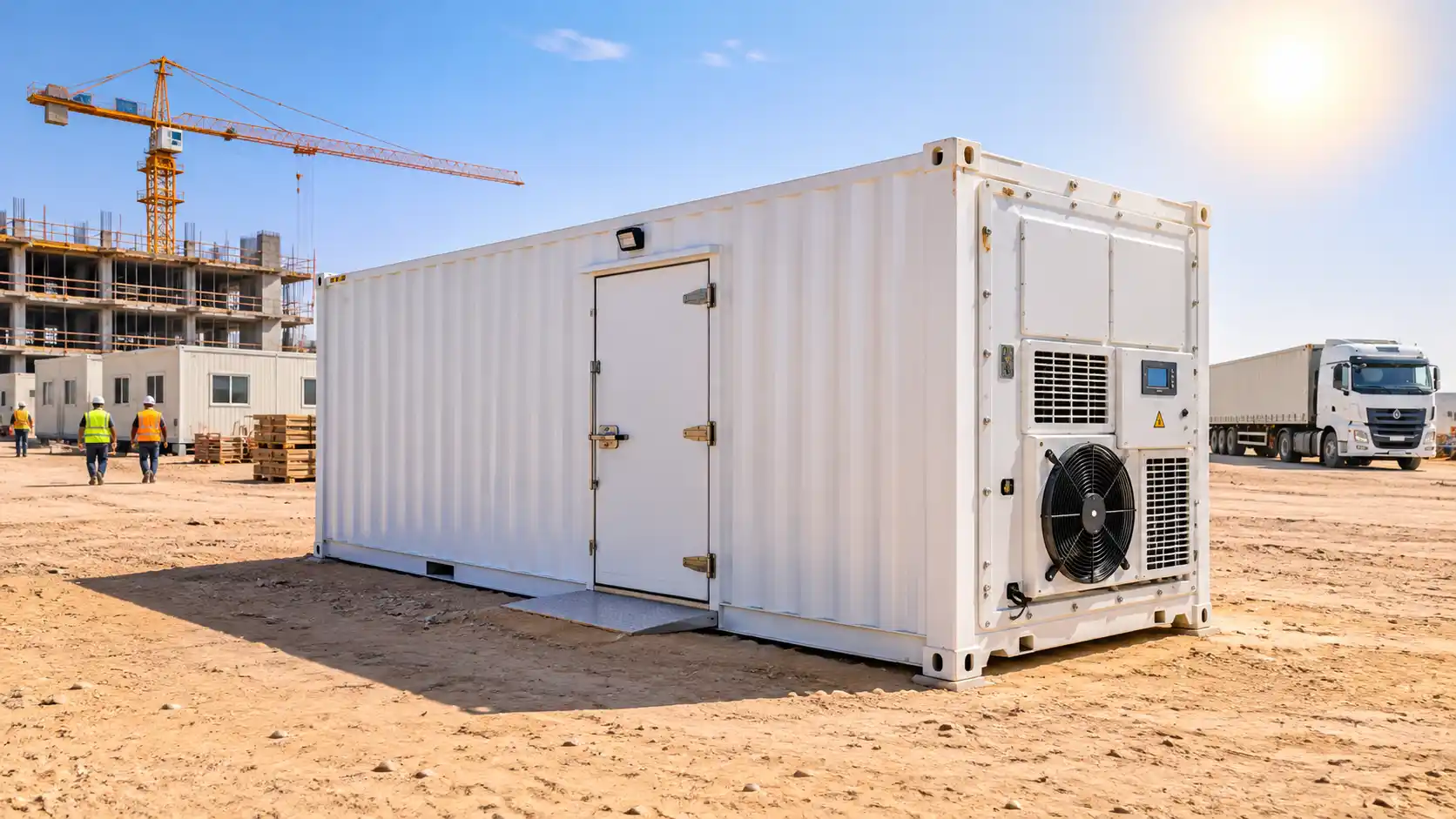
Anyone who has run a construction camp, a desert catering operation or an oil and gas site knows the problem. The nearest cold room is hours away, the delivery truck is late, and the temperature is climbing past 45°C. Food spoils, medicines lose potency and a small logistics hiccup becomes an expensive one.
That is why more project managers, caterers and contractors across the UAE and the wider region now rely on container cold rooms. At containercoldroom.ae, we see every day how a well-specified refrigerated container can keep a remote operation running smoothly. This guide covers what these units are, where they work best, and what to consider before you buy or rent one.
Understanding Container Cold-Rooms
A container cold room is a shipping container, usually 10, 20 or 40 feet, converted into a temperature-controlled storage space. The shell is insulated with high-density panels, fitted with a refrigeration system, and finished with a hygienic interior that is easy to clean.
Think of it as a cold room that arrives ready to work. There is no building to design, no months of civil work and no permanent footprint. You place it on level ground, connect power, and start loading stock.
Depending on the setup, a unit can serve as a chiller (typically +2°C to +8°C) for fresh produce, dairy and beverages, or as a freezer (-18°C to -25°C) for meat, seafood and frozen goods. Some models are dual-zone, so you can keep both in one container.
Benefits and Applications of Cold Storage Containers
Increased Flexibility and Mobility
The biggest advantage is that a container cold room moves when your project moves. When a site closes or a contract ends, the unit goes onto a truck and heads to the next job. A fixed cold room can’t do that.
It is also quick to set up. Rather than waiting weeks for a built structure, many projects have a container operational within days of delivery. For seasonal events, short-term contracts or emergency situations, that speed matters.
Cost-Effectiveness and Scalability
Building a permanent cold room means capital expenditure, planning approvals and a long timeline. Containers give you options:
- Buy if you have a long-term or recurring need.
- Rent if the requirement is temporary, such as an exhibition, a festival or a short construction phase.
- Scale up by adding a second or third unit as your headcount or inventory grows, without redesigning anything.
This pay-for-what-you-need approach protects your budget, especially on projects where timelines shift. If you’re weighing the options, our container cold room rental and sales pages explain how each route works.
Suitable Applications for Cold Storage Containers
Container cold rooms fit a wide range of uses:
- Construction and labour camps: storing fresh food for large workforces.
- Oil, gas and mining sites: reliable cold storage far from town.
- Catering and events: holding perishables close to the venue.
- Pharmaceutical and healthcare logistics: temperature-sensitive medicines and vaccines.
- Agriculture and fisheries: cooling produce and catch near the source to cut post-harvest losses.
- Disaster relief and humanitarian missions: quick, dependable cold chain support when infrastructure is limited.
- Retail and hospitality: extra capacity during peak seasons like Ramadan or holiday periods.
Features and Specifications of Container Cold-Rooms
Insulation and Temperature Control
Good insulation is what separates a dependable unit from a power-hungry one. Quality container cold rooms use PUF (polyurethane foam) or PIR sandwich panels, typically 80 to 150 mm thick, which keep heat out even in extreme summer conditions.
The refrigeration side matters just as much. Look for:
- A condensing unit rated for high ambient temperatures, since standard units can struggle in Gulf summers.
- Digital controllers with accurate thermostats and defrost cycles.
- Temperature monitoring and alarm systems, ideally with remote alerts, so you hear about a problem before your stock does.
- Backup or generator-ready power options for sites with unstable supply.
Size and Capacity Options
Most suppliers offer three standard formats:
| Size | Typical Use |
| 10 ft | Small camps, clinics, tight sites |
| 20 ft | General-purpose catering, projects, retail backup |
| 40 ft | Large camps, distribution, bulk storage |
Internal shelving, pallet racking, strip curtains and LED lighting can be added depending on what you’re storing. If you’re unsure about capacity, work backwards from how many people you feed or how many pallets you handle weekly, then add a buffer. Our team at containercoldroom.ae can help you size this properly through our cold room solutions.
Security and Access Control
Remote sites often mean less supervision, so security needs thought. Heavy-duty locking bars, tamper-resistant doors, internal safety releases (so no one gets trapped inside) and optional keypad or digital access all help. For high-value goods like pharmaceuticals, consider CCTV and access logs.
Design Considerations for Project and Remote Sites
Environmental Factors and Site Requirements
Before you order, think about where the container will actually sit.
- Heat and sun exposure: In desert conditions, a shaded canopy or a reflective roof coating can noticeably reduce compressor load.
- Dust and sand: Choose units with protected condenser coils and plan for regular cleaning.
- Humidity: Coastal sites need corrosion-resistant finishes.
- Ground conditions: The base should be level and firm, ideally on concrete pads, compacted gravel or steel supports.
- Power availability: Confirm whether you have mains, a generator, or solar support, and check the voltage and phase.
Customization and Integration
Every project is different, and a good container cold room should adapt to yours. Common customizations include:
- Custom internal layouts with racking, hanging rails or separate zones.
- Branded exteriors for events and retail.
- Integrated generators or hybrid power systems.
- Anterooms or loading ramps for easier handling.
- Combined units, such as a cold room next to a dry-storage container.
Our custom cold room manufacturing page shows what’s possible for different industries.
Transportation and Mobility Challenges
Getting a 20 or 40-foot container to a remote site is rarely as simple as dropping it off. Consider:
- Access roads: Can a trailer and crane reach the location?
- Offloading: Do you need a crane or forklift on arrival?
- Permits and routes: Some regions require transport permits, particularly for oversized loads.
- Pre-commissioning: Units tested before dispatch save time and troubleshooting on site.
Planning the route and the offloading method early prevents the awkward situation of a container sitting on a truck with nowhere to go.
Installation and Maintenance of Container Cold-Rooms
Preparing the Site for Installation
A little preparation goes a long way:
- Choose a flat, stable and well-drained location.
- Keep clearance around the unit, especially near the condenser, for airflow.
- Arrange a suitable power connection and earthing in advance.
- Position the container so the door opens toward an easy loading path.
- Avoid placing it against walls or other containers that could trap hot air.
Installation Process and Considerations
Once the container arrives, the process is usually straightforward: positioning, levelling, electrical connection, and a full system test. Allow the unit to reach its set temperature before loading anything, and load progressively rather than all at once, especially with warm stock. This stops the system from being overwhelmed. If you want installation handled for you, see our installation and commissioning services.
Maintenance and Troubleshooting Tips
Regular upkeep is the cheapest insurance you can buy. A simple routine looks like this:
- Daily: check temperature readings, door seals and alarms.
- Weekly: clean the interior, check for ice build-up and make sure airflow around stock isn’t blocked.
- Monthly: clean condenser coils, check drainage, and inspect electrical connections.
- Annually (or per manufacturer guidance): book a professional service for refrigerant levels, compressor health and controller calibration.
If your cold room isn’t cooling properly, check the basics first: is the door fully closed, are the coils clogged with dust, is power stable, and is the unit overloaded? If the issue continues, call a technician rather than guessing. Our maintenance and AMC support is built for exactly this.
Energy Efficiency and Sustainability in Cold Storage Containers
Energy-Saving Technologies in Container Cold-Rooms
Cooling is energy-hungry, particularly in hot climates, so efficiency pays back quickly. Features worth looking for include:
- Inverter or variable-speed compressors, which adjust output to demand.
- High-efficiency EC fans in evaporators and condensers.
- LED lighting, which gives off far less heat than traditional bulbs.
- Strip curtains and quick-close doors that cut cold air loss.
- Smart controllers that optimise defrost cycles and track energy use.
- Solar-assisted power for off-grid or low-grid sites.
Combine these with good habits, like keeping door-open times short and not overloading shelves, and energy bills drop noticeably.
Sustainable Materials and Recycling
Reusing shipping containers is sustainable in itself, since it gives steel structures a second life instead of leaving them idle. Add modern insulation panels with low environmental impact, and a container cold room becomes a fairly responsible option compared with new-build construction. At end of life, steel, aluminium and refrigeration components can largely be recovered and recycled.
Compliance with Environmental Standards
Regulations around refrigerants and food safety are tightening everywhere. When choosing a unit, ask about:
- Refrigerant type: low-GWP, ozone-friendly options are increasingly preferred.
- Food safety compliance: such as HACCP-friendly interior finishes and local municipality requirements, for example Dubai Municipality or ADAFSA guidelines.
- Quality and safety standards: relevant CE, ISO or equivalent certifications for equipment.
Working with a supplier who understands local regulations saves you from costly changes after the unit is on site.
Final Thoughts
For projects and remote locations, a container cold room is often the most practical way to keep a cold chain intact. It’s mobile, scalable, quick to deploy, and when properly specified, tough enough for harsh conditions. The key is choosing the right size, insulation, power setup and support from the start.
If you’re planning a project and need reliable cold storage, the team at containercoldroom.ae can help you choose, customise and deploy the right unit. Contact us for a quote or a site consultation.
FAQ
Container cold rooms are 10, 20 or 40 feet shipping containers that have been converted into temperature-controlled storage units. They are fitted with highly insulated panels, a refrigeration unit, and a hygienic easy-to-clean interior. They come fully assembled; hence all that is needed is level ground and power connection. They can be used as chillers (+2°C to +8°C), freezers (-18°C to -25°C), and dual zone units.
A container chiller is used for storing fresh products at +2°C to +8°C, while a container freezer is used for storing frozen products at -18°C to -25°C. The container chillers are meant for produce, dairy, and beverages, while container freezers are suitable for meat, seafood, and frozen foods.
Fresh and chilled stock: 10 feet container chiller or 20 feet container chiller
Frozen stock: 10 feet container freezer or 20 feet container freezer
Select 10 ft container if the site is small and 20 ft if the project is general and catering. The 10 ft container chiller and 10 ft container freezer will serve you well for small camps, clinics, etc. The 20 ft container chiller and 20 ft container freezer are the right size for larger catering projects, construction camps, etc. To determine the right size, calculate the number of people you cater to or the number of pallets you handle on a weekly basis.
Yes, it can. But it must be designed for such conditions. It should have a condensing unit that operates well at high ambient temperatures and PUF/PIR insulation of 80 mm to 150 mm thick. In desert sites, there should be some shading canopy or roof reflector coating. We sell container cold rooms that have been specifically designed for such high temperatures in UAE including Dubai and Abu Dhabi.
Yes. A dual-zone container cold room has a chiller section and a freezer section in one container. If you need more capacity for each temperature, you can instead pair a 20 feet container chiller with a 20 feet container freezer. Pairing two units also gives you a backup if one needs servicing.
Daily inspections and annual professional services. Temperature, door seals and alarm checks on a daily basis. Interior cleaning on a weekly basis, cleaning of condenser coils on a monthly basis, and booking annual professional services for checking refrigerants, compressor, and controllers. Our maintenance and AMC service will include this. If the unit stops working, check for door seal, condenser coil cleaning, power supply, and overloading of the unit.